


From Tasmanian roots to Caloundra’s streets: Kendall Hatcher MP's purpose and passion
The State Member for Caloundra, Kendall Hatcher MP moves through her days like someone who has never quite learned how to slow down.
One moment she sits across from a CEO pitching a digital health program designed to cut alcohol consumption. The next, she listens intently as a young theatre director outlines plans to stage a new play in Caloundra. Meetings blur into door-knocks, phone calls into community events.
“Successful politicians,” an observer once noted of her schedule, “keep pushing to meet people and connect.”
Kendall simply calls it the job she signed up for.
Kendall carries the pace with quiet energy. Four children aged 17 and under keep her grounded. After long parliamentary days, she still handles school runs, dinner, and the ordinary rhythm of family life. Yet her schedule rarely eases. She has worn through multiple pairs of Frankie4 shoes in just a few years, testament to the kilometres covered on foot in her electorate.

Kendall grew up more than two thousand kilometres away in Ulverstone, on Tasmania’s northwest coast between Burnie and Devonport. She describes it as a safe, simple childhood. Kids rode bikes freely. Everyone knew everyone. In the town centre stood what she jokes was “the greatest clock in the world.” Community ties ran deep, even if opportunities sometimes felt limited.
She was the first in her family to attend university and the first to travel overseas.
Education, she decided early, offered the key to a better life. A big reader and initially extremely shy, she didn’t speak much at school until Year Two, Kendall found comfort in books and the support of her grandparents, especially her “Pa,” who tested her on maths formulas when she was three or four. The Ulverstone Library became a second home.
At 16, she left home and began working and studying, while living independently. Her Year 11 and 12 results reflected the upheaval. Teaching appealed because she had known good teachers and saw the profession as respected and stable. Limited exposure to other careers in Ulverstone shaped that choice. Later, she returned to university for an accounting degree.
Braddon, the electorate encompassing her hometown, remains one of Australia’s poorest in the nation’s poorest state, geographically isolated with structural challenges that Kendall knows intimately. Tasmania now enjoys more tourism than in her childhood, but the memory of constraint lingers and perhaps drives her desire to work even harder in her Sunshine Coast electorate.
Her political awakening arrived in 1996. In social studies class, teachers wheeled in televisions as news of the Port Arthur massacre unfolded. The shock of violence in a small state reverberated even in distant Ulverstone. Kendall watched Prime Minister John Howard respond with what she still considers “the greatest piece of legislation this country has ever seen”, tight gun control rolled out in record time.
“Government can act quickly when there’s genuine need,” she says.
The destruction of thousands of rifles and pistols followed. Kendall views the outcome as proof of genuine leadership. She argues there is no need for semi-automatic weapons in civilian hands and points to Australia’s three decades of relative success compared to the risks visible elsewhere. Firearms, she notes, still have a responsible place, particularly for farmers, but the balance struck, feels right.
That sense of right and wrong runs through her like a moral compass. Contributing matters.
Doing “the next right thing” guides her.
She challenges processes in meetings, committees, and task forces, always asking “why” instead of accepting “that’s the way we’ve always done it.”
Problem-solving sits in her DNA. She describes herself as “mathy” and speaks of an “invisible rule book of life”, the social constraints that feel like laws but often aren’t.
Recognising them, she believes, unlocks creative solutions.

Kendall’s recent marriage brought one such decision into sharp focus. She chose to take her husband’s name. For a first-term MP reliant on name recognition, the move carried risk. She weighed it up carefully. Public reaction proved revealing, some social media users saw it as a signal of conservatism. Kendall views it differently.
Freedom means individual choice: keep a name, change it, or blend them. Her previous political surname came from her first husband. Keeping it after remarrying felt inconsistent. Even her birth name, after all, had been her father’s.
“Reward for effort” is an important foundation to Kendall’s story. It aligns with a life built through persistence.

Before parliament, Kendall built a business in aged care. The contrast in impact stays with her. In politics, she says, you gain a platform and a voice to influence community outcomes. In business, results often felt more immediate. One story illustrates the point...
A client in aged care had dreamed her whole life of holding an art exhibition. Kendall went to work. She contacted residents, invited submissions, and organised the event. Attendees could purchase pieces. On the day, they sold more than $2,000 worth of artwork. Tangible joy. A dream realised. That same drive to deliver brought her to Caloundra twenty years ago with “not a peanut” to her name. The community welcomed her.
She built a business that transformed her circumstances. Now she feels a responsibility to give back. The electorate has changed dramatically. Aura, the largest master-planned community in the country, sits at about 40 percent capacity. Another 50,000 people are expected to move into the area. Growth was planned, but infrastructure investment has struggled to keep pace. Congestion has become a daily reality.
Kendall’s response has come from the ground up.
She door-knocked 10,000 homes during her campaign and continues the practice as a sitting member, an unusual commitment outside election periods. The shoes wore out. The data proved invaluable.
Real conversations cut through social media noise.
That “credible data” helped shape the Caloundra Congestion Busting plan, a significant investment addressing decades of underinvestment.

She frames the coming influx as both a challenge and an opportunity: new residents from interstate and overseas, first home buyers chasing their own version of the stability she found.
Caloundra was historically seen as a safe seat, but margins have gradually tightened since former Deputy Premier, Joan Sheldon won the seat for the Liberal Party in 1992. Kendall considered running in 2020, but stepped back due to the demands of her business and the impacts of COVID. The seat was lost. When she did run, she fought hard. Victory came through persistence.
Inside her party, Kendall values teamwork, discipline, and clarity of message. Disagreement happens, but alignment on goals matters more. She describes the current state government team as operating under unique circumstances.
Premier David Crisafulli stands out.
Kendall says that what Queenslanders see publicly: a genuine, family-oriented, hardworking, sports-loving, individual, matches the man in private. He loves the Cowboys, remains accessible, and earns deep trust.

Kendall points to a leadership principle she admires: strong leaders set high standards and expect others to rise.
‘Standards should not be lowered to meet people where they are.’
That approach, she believes, flows into greater accountability and integrity across government.
Her parliamentary “bestie” is Rebecca Young MP, Member for Redlands, the Brisbane bayside electorate. Both seats share marginal status and shifting demographics. Ministers John-Paul Langbroek (education and the arts) and Brent Mickelberg (transport and main roads) serve as valued mentors. Kendall focuses less on opponents than on execution. Delivery defines the task: do what was promised, avoid what was ruled out, and build trust. She approaches politics like business, concentrate on your own work rather than competitors.
Politics, she acknowledges, can create winners and losers. Yet it offers a platform unavailable elsewhere.
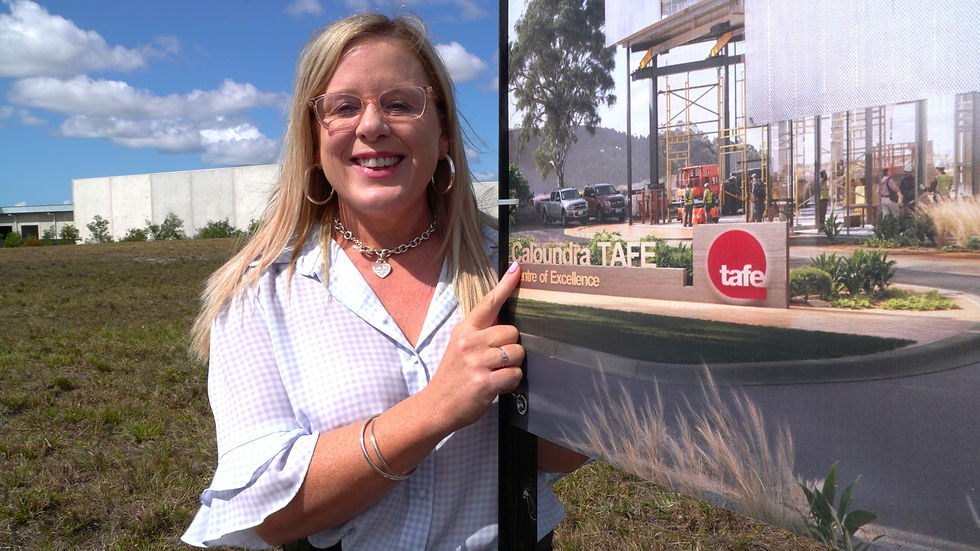
Her path from shy Tasmanian schoolgirl to state parliamentarian demonstrates the possibility of change. From the shock of Port Arthur to the grind of 10,000 door-knocks in Caloundra, Kendall’s story circles back to contribution. Education opened doors. Community provided anchors. Persistent effort turned opportunity into reality.
She still carries the lessons of that simple Ulverstone childhood, the library books, her grandfather’s encouragement, the belief that effort earns reward.
In Caloundra’s rapid growth, she sees echoes of the ambition she once had to chase for herself.
The pace remains relentless. Meetings with CEOs and theatre directors continue.
Shoes keep wearing out. And Kendall Hatcher keeps moving, connecting, and working to turn planned growth into lived success for the community that welcomed her two decades ago.


Comments